[ad_1]
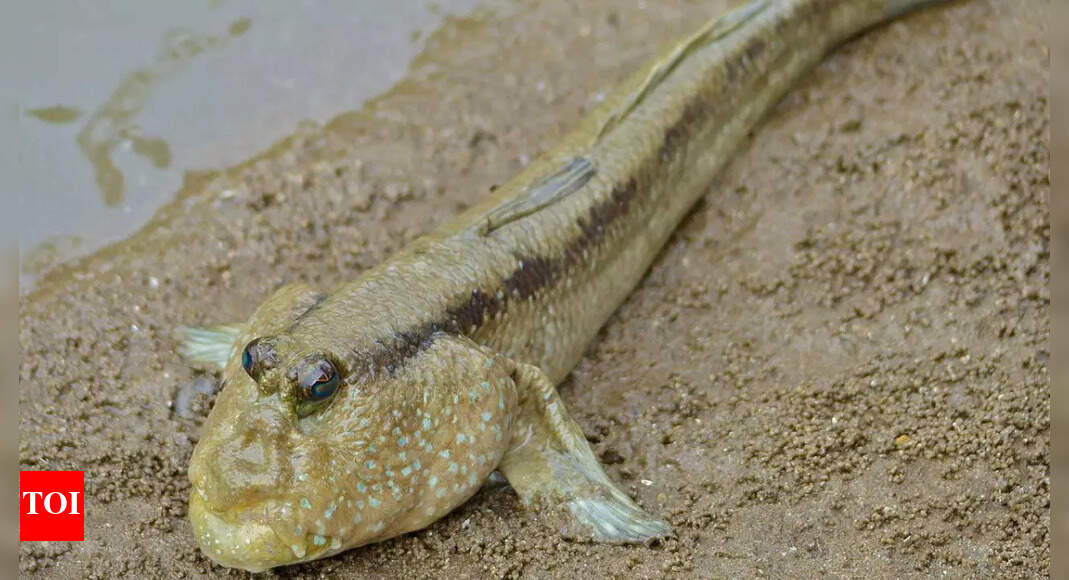
Mudskippers are truly remarkable fish, uniquely adapted to live both in water and on land. Unlike most fish that stay submerged, mudskippers spend a significant amount of time out of water, skillfully moving across muddy shores and climbing mangrove roots. Their specialized pectoral fins function almost like legs, enabling them to “walk” and climb, which is highly unusual for fish. Additionally, mudskippers can breathe through their skin and the lining of their mouths and throats, allowing them to absorb oxygen while on land. They also exhibit fascinating behaviors like territorial displays, complex mating rituals, and burrow building, which help them survive predators and cope with extreme heat and fluctuating salinity levels.These adaptations enable mudskippers to thrive in the challenging intertidal zones, where tides cause rapid changes in water levels and environmental conditions. Their social behaviors, impressive mobility, and ability to exploit both aquatic and terrestrial habitats make them one of the most fascinating creatures of coastal ecosystems.
Mudskipper adaptations: Strong fins for walking and climbing on land
Mudskippers are equipped with strong, muscular pectoral fins that function almost like legs. These fins allow them to crawl, hop, and even climb across mudflats and mangrove roots. This adaptation is crucial for movement across the often slippery, uneven terrain of tidal zones. Unlike other fish, mudskippers can propel themselves on land using coordinated movements of their fins and tail, making them true amphibious fish capable of exploring terrestrial habitats.One of the most remarkable features of mudskippers is their ability to breathe both in water and on land. They perform cutaneous respiration, absorbing oxygen directly through their skin, and use the lining of their mouth and throat to breathe when out of water. This allows mudskippers to remain active during low tides when water is scarce, avoiding predators and searching for food. Their gills, which function underwater, remain moist to facilitate air breathing, demonstrating a perfect evolutionary balance between aquatic and terrestrial respiration.
Mudskipper eyes and diet: How they see and find food
Mudskippers have protruding eyes located on top of their heads, giving them excellent binocular vision above the water surface, crucial for both hunting and navigation. This adaptation allows them to detect predators and prey while staying partially submerged or completely out of water, providing safety and increased foraging efficiency. Their sharp eyesight is critical for survival, enabling them to hunt small insects, crustaceans, and algae effectively while avoiding threats in both aquatic and terrestrial zones.Mudskippers are omnivorous and opportunistic in their feeding habits. They feed on algae, small insects, and tiny crustaceans, scavenging both in mud and shallow water. This dual feeding strategy ensures that they obtain enough nutrients to support their high-energy, terrestrial lifestyle, reproductive needs, and growth. By foraging in multiple habitats, mudskippers maintain balanced nutrition, adapt to environmental changes, and thrive in fluctuating intertidal ecosystems.
Mudskipper behaviour and movement in mud and mangroves
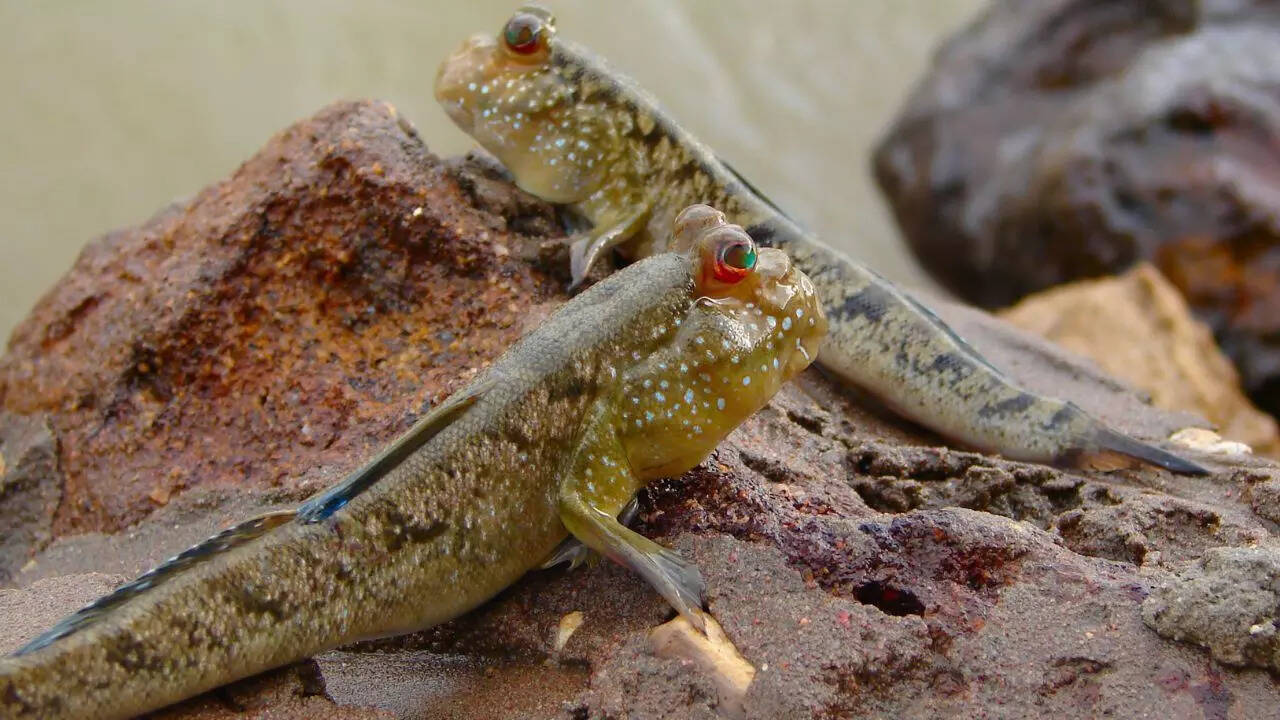
Mudskippers are highly territorial animals. Males often perform push-ups, fin displays, and other visual gestures to warn rivals and attract mates. These behaviours are vital for establishing dominance, protecting burrows, and securing reproductive success within crowded, competitive habitats. The intricate social interactions of mudskippers provide a fascinating window into complex communication and behavioural strategies among amphibious fish.Some mudskippers demonstrate impressive climbing abilities. Using their strong, flexible fins, they can grip and ascend mangrove roots, rocks, and other challenging obstacles. This climbing behaviour allows them to access new feeding grounds, escape predators quickly, and find shelter during high tides or environmental changes. Their climbing skills highlight the remarkable versatility, resilience, and adaptability of mudskippers in dynamic intertidal ecosystems worldwide.
How mudskippers lay eggs and survive changing tides
Mudskippers reproduce by digging deep, oxygenated burrows in the mud, where females lay eggs. These burrows retain water, ensuring the survival of the eggs during low tides and protecting them from aquatic and terrestrial predators. Males often guard the burrows, maintaining optimal temperature, humidity, and oxygen conditions for embryonic development. This reproductive strategy illustrates the mudskipper’s ability to adapt its behaviour to harsh, fluctuating environmental conditions.Mudskippers are perfectly adapted to survive extreme tidal fluctuations. They move between water and land depending on the tides, exploiting high tides to access new food sources and returning to burrows during low tides. Their ability to navigate such rapidly changing habitats demonstrates both physiological and behavioural adaptability, making them one of the most resilient fish species in mangrove ecosystems.Also Read | Discover Nongjrong, Meghalaya: The hidden village that left Anand Mahindra in awe with sunrises, waterfalls; know how to reach
[ad_2]
Source link